
In developing integrated guidelines for energy efficiency, this guide combines the National Research and Planning Unit (NRPU) and Sustainable Housing and Energy Conservation (SHEC) frameworks, while also incorporating elements from ASHRAE standards and local building tools. These guidelines are crucial as they provide a comprehensive approach to optimizing building performance, ensuring that locally available materials are utilized effectively. By analyzing various aspects such as occupancy control, window-to-wall ratios (WWR), and ventilation systems, this guide aims to create a tailored strategy that not only meets energy efficiency targets but also enhances occupant comfort. This integration allows us to leverage the best practices from established standards while considering the unique context of our local environment and resources.
Guidelines from SHEC and NRPU and EUI analysis by insight 360
Use low-emissivity (Low E) or double-glazed glass to improve thermal performance and allow natural light. Opt for Guardian Windows' Low E glass with a 0.35 solar heat gain coefficient to reduce cooling loads. High-performance glass can lower EUI by up to 20% by enhancing insulation and minimizing HVAC use.
Use standard window dimensions of 6'x4' for bedrooms and lounges, and 5'x7' for dining rooms to ensure proper ventilation and light. Utilize double-glazed glass to maintain energy efficiency. Properly sized windows can reduce EUI by 5-10% by optimizing natural light and reducing lighting and heating requirements.
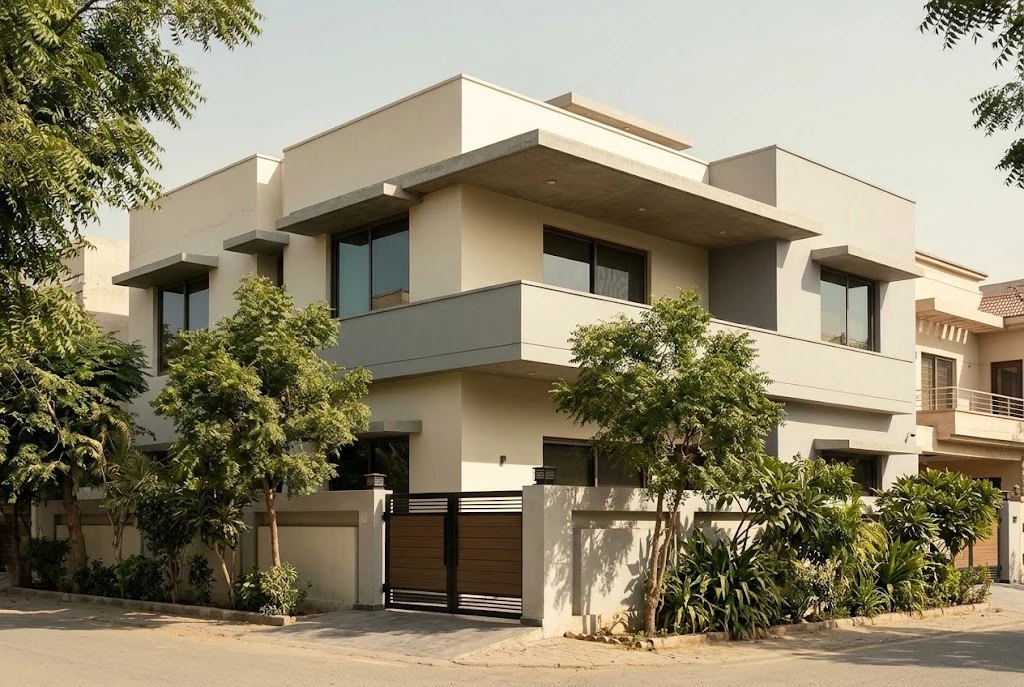
Maintain a window-to-wall ratio of 30-40% for North and West, and 0-15% for South to balance light and thermal performance. Use high-performance insulated wall materials with efficient windows to optimize the ratio. This can reduce EUI by 5-10% by balancing natural light and thermal efficiency.
Install sunshades at 1/3 of window height for South, 1/4 for East, and 2/3 for West to control solar gain effectively. Utilize materials with high solar reflectance for sunshades to enhance their effectiveness. EUI Reduction: Properly designed sunshades can achieve a 3-6% reduction in EUI
Ensure proper sealing of gaps around window frames and use insulating materials to prevent air leakage. Utilize extruded polystyrene insulation with an R-value of 4.8 to enhance thermal performance.
Align window projections with solar angles to optimize daylight and control solar heat. Apply reflective coatings or films on windows to reduce solar heat gain.
Design sun projections to extend 2/3 of the window height, aligning with solar angles for optimal daylight and minimal heat gain. Use durable materials that can withstand the weather while providing shade.
Utilize daylight effectively with an automatic sensor-based system to optimize lighting and reduce energy consumption. Implement smart lighting systems that adapt to natural light levels. Effective daylight usage can lead to a 4-6%% reduction in EUI by decreasing reliance on artificial lighting.
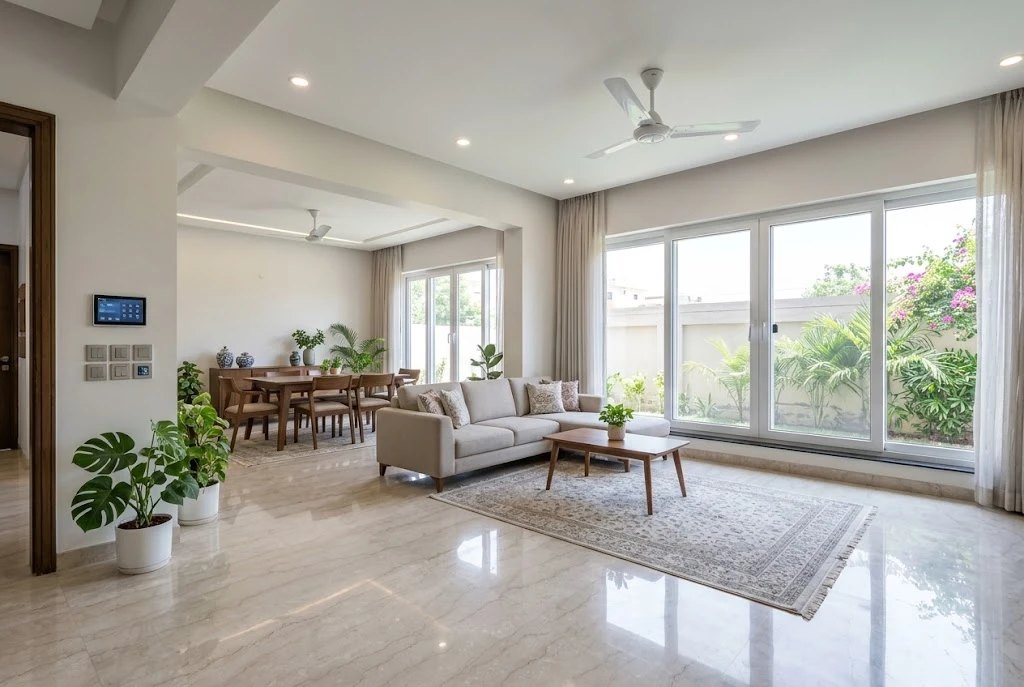
According to NRPU guidelines, lighting fixtures should have an efficiency of approximately 3.23 watts per square meter (W/m²). The use of LED lighting is recommended as it can significantly reduce energy consumption. Implementing LED fixtures can lead to a reduction of up to 3% in the Energy Use Intensity (EUI), making them a crucial component in achieving energy efficiency.
Tile and marble flooring contributes to energy efficiency by providing thermal mass, which helps regulate indoor temperatures. According to NRPU guidelines, these materials absorb heat during the day and release it slowly at night, reducing the need for artificial heating and cooling. The reflective surfaces of tiles and marble also help minimize heat absorption, keeping interiors cooler.
Set maximum air infiltration rates at 0.37 for PVC and aluminum, and 0.34 for wood to maintain energy efficiency. Utilize high-performance window frames and seals to achieve these rates. this can lead to a 5-10% reduction in EUI by limiting unwanted air exchanges.
Promote energy-saving habits among occupants, such as turning off lights and appliances when not in use. Use smart home technology to encourage energy-efficient behaviors. This can achieve a 5-10% reduction in EUI through reduced energy consumption.

R-38 roof construction is recognized for its high insulation value, which significantly enhances energy efficiency in buildings. This insulation level typically involves using materials like extruded polystyrene (XPS), known for its excellent thermal resistance and moisture resistance properties. XPS insulation, with an R-value of approximately 4.8 per inch, can be used in layers to achieve the desired R-38 rating, ensuring minimal heat transfer and maintaining stable indoor temperatures.
Incorporating polystyrene insulation in R-38 roof construction not only improves thermal performance but also contributes to reducing energy costs. The lightweight nature of polystyrene makes it easy to handle and install, while its durability ensures long-term performance. Overall, R-38 roofs with polystyrene insulation provide an effective solution for energy-efficient building designs, leading to lower heating and cooling demands.
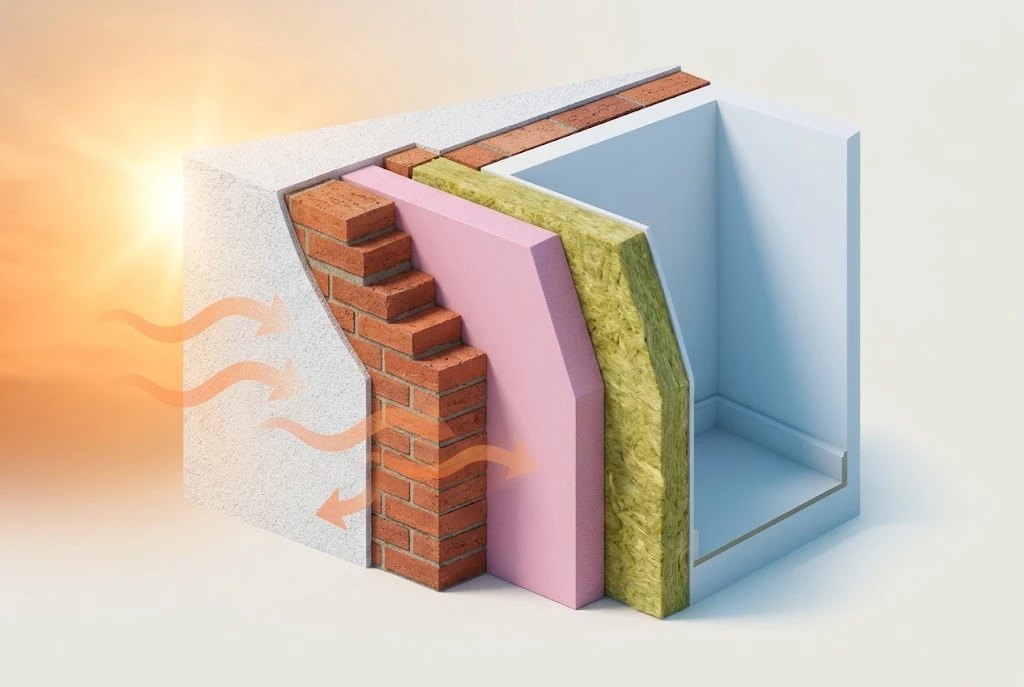
Wall construction utilizing polystyrene and rock wool insulation can lead to a significant reduction in energy use intensity (EUI) by up to 12%. Polystyrene insulation typically offers an R-value of 4.8 per inch, while rock wool provides an R-value of around 3.0 per inch, contributing to effective thermal resistance. According to the SHEC, using these materials helps maintain a stable indoor temperature, enhancing comfort and energy efficiency. Additionally, the NRPU guidelines recommend achieving a U-value of 2.67 W/m² for exterior walls, further optimizing thermal performance and reducing energy consumption. By integrating these insulation types, buildings can effectively minimize heating and cooling demands, ultimately leading to substantial energy savings.
These are the 4 factors that make most of the EUI difference when modifies
R-38 roof construction, utilizing materials like extruded polystyrene insulation, can effectively reduce energy use intensity (EUI) by up to 17% through its superior thermal resistance. This insulation minimizes heat transfer, leading to lower heating and cooling demands, thus enhancing overall energy efficiency in buildings.
Occupancy/operation control can reduce energy use intensity (EUI) by up to 14% by adjusting HVAC systems based on real-time occupancy levels, ensuring energy is only used when spaces are occupied. Implementing smart building technologies, such as occupancy sensors, can optimize energy consumption and enhance comfort.
Window-to-wall ratio (WWR) impacts EUI by up to 12% through strategic design that balances natural light and thermal performance. A lower WWR minimizes heat loss and gain, while still providing adequate daylighting, leading to reduced reliance on artificial lighting and HVAC systems.
Effective ventilation strategies can decrease EUI by up to 7% by ensuring proper air exchange without excessive energy loss. Utilizing demand-controlled ventilation systems allows for adjustments based on occupancy and air quality, enhancing indoor comfort while optimizing energy efficiency.